


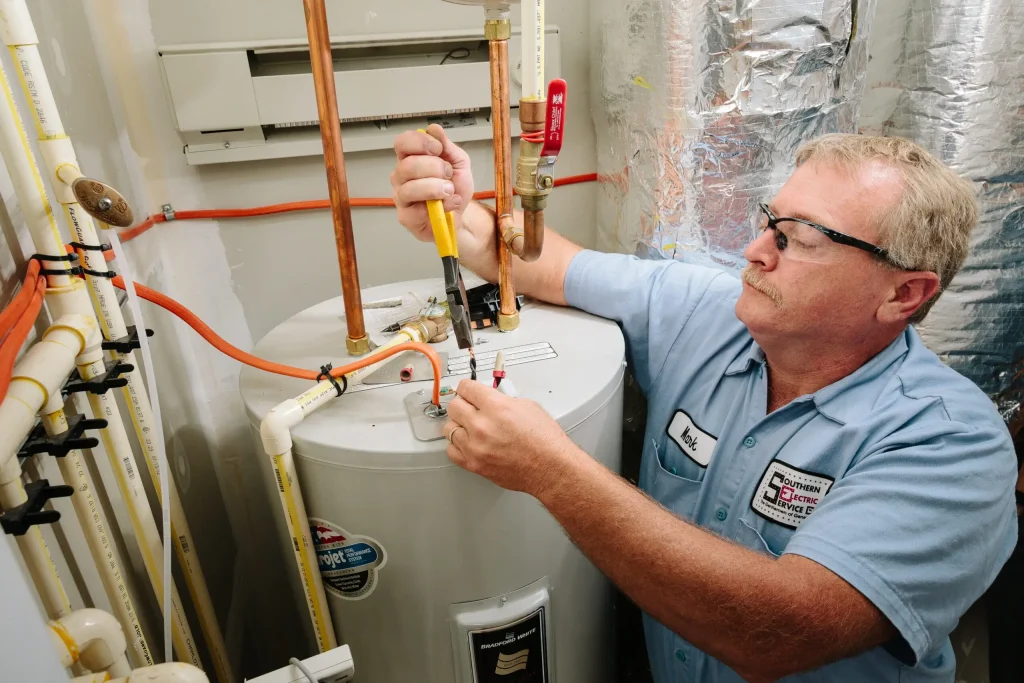
Your water heater works hard every single day, providing hot water for showers, dishes, laundry, and countless other tasks. But like all appliances, water heaters don’t last forever. Knowing when it’s time for replacement rather than repair can save you from unexpected failures, water damage, and costly emergency situations.
At M & M Plumbing, we help Chula Vista homeowners identify when their water heaters have reached the end of their useful life. Here are seven clear signs that indicate it’s time to consider water heater replacement.
1. Your Water Heater is Over 10-15 Years Old
Age is the most reliable indicator that replacement is approaching. Traditional tank water heaters typically last 10 to 15 years, while tankless models can function for 20 to 30 years with proper maintenance.
If your Chula Vista home was built in the early 2010s or earlier and still has the original water heater, it’s likely approaching or past its expected lifespan. Even if it’s still functioning, older units operate less efficiently and are prone to sudden failure.
How to check your water heater’s age:
Look for the serial number on the manufacturer’s sticker, usually located on the upper portion of the tank. The first few characters typically indicate the manufacture date. For example, a serial number starting with “D09” often means April 2009.
Once your water heater passes the 10-year mark, start planning for replacement. While some units last longer, the risk of failure increases significantly after this point. Proactive replacement allows you to research options, compare prices, and schedule installation at your convenience—rather than facing an emergency situation.
2. Rusty or Discolored Water
If rusty, brown, or discolored water comes from your hot water taps, your water heater tank is likely corroding from the inside. This is a serious warning sign that shouldn’t be ignored.
Inside every tank water heater is an anode rod—a sacrificial component designed to attract corrosive elements and protect the tank itself. Once this rod deteriorates completely, corrosion attacks the steel tank walls. When rust appears in your hot water, the tank has already begun corroding.
How to test if it’s your water heater:
First, determine if the discoloration affects only hot water or both hot and cold. If only hot water is rusty, the problem is your water heater. If both hot and cold water are discolored, the issue is likely with your pipes or the municipal water supply.
Run the hot water for a few minutes. If the water clears up, it might be sediment disturbance. If it stays rusty, internal tank corrosion is the likely culprit.
Unfortunately, once a tank begins rusting from the inside, replacement is the only solution. No repair can reverse this deterioration. Continuing to use a corroded tank risks tank failure and water damage to your Chula Vista home.
3. Leaking Water Around the Tank
Water pooling around your water heater’s base is never normal and often indicates the tank has developed a leak. This is one of the most urgent signs that replacement is needed immediately.
Tank leaks typically occur when metal expands and contracts during heating cycles over many years. Tiny fractures develop in the steel, allowing water to escape. Once a tank leak begins, it only worsens—there’s no way to seal a cracked tank.
What to check before assuming the worst:
Not all water around your tank means the tank itself is leaking. First, inspect these components:
- Temperature and pressure relief valve: This safety valve may be releasing water if pressure builds excessively
- Inlet and outlet connections: Fittings at the top of the tank can loosen or corrode
- Drain valve: Located near the bottom, this valve can develop leaks
- Condensation: In rare cases, condensation on pipes might drip and pool at the base
If you’ve checked these components and water continues accumulating, the tank itself is likely compromised. Turn off the water supply to your water heater and call M & M Plumbing immediately for emergency water heater replacement in Chula Vista.
Delaying replacement risks significant water damage to your home’s flooring, walls, and belongings—especially if the tank is located in a finished area rather than a garage or outdoor closet.
4. Strange Noises: Rumbling, Popping, or Banging
All water heaters make some operational noise, but loud rumbling, popping, or banging sounds indicate serious problems developing inside your tank.
These noises are typically caused by sediment buildup at the bottom of the tank. As water heats, it must bubble through this hardened sediment layer, creating rumbling and popping sounds. The sediment acts as a barrier between the heating element and water, reducing efficiency and causing the metal to overheat.
Chula Vista’s hard water accelerates sediment accumulation. Minerals in the water settle at the tank’s bottom, hardening into a concrete-like layer over time. This is especially problematic for homes in areas with higher mineral content in the water supply.
Can this be fixed without replacement?
If caught early, professional flushing can remove sediment and restore quieter operation. However, if the noise persists after professional maintenance, the tank has likely suffered permanent damage. The heating element may be calcified, or the tank walls weakened by repeated overheating.
Continuous loud noises combined with decreased efficiency usually indicate it’s time for replacement rather than attempting repairs on a compromised system.
5. Inconsistent Water Temperature or No Hot Water
If your showers start hot but quickly turn lukewarm, or you’re constantly running out of hot water sooner than you used to, your water heater is struggling to meet demand.
Common causes of temperature issues:
For tank water heaters:
- Failed heating elements (electric models)
- Malfunctioning gas burner or thermocouple (gas models)
- Sediment insulating water from the heating source
- Undersized tank for your household’s current needs
- Deteriorating tank losing heat retention capacity
For tankless water heaters:
- Mineral buildup restricting flow
- Failing heating elements
- Undersized unit for simultaneous demands
While some temperature problems can be repaired—like replacing a heating element or thermocouple—others indicate the system is failing. If your water heater is over 8-10 years old and experiencing temperature inconsistencies, replacement often makes more financial sense than repair.
Consider this: you might spend $300-$500 repairing an old unit, only to face another failure months later. Investing in a new, efficient water heater provides reliability and peace of mind.
6. Higher Energy Bills Without Increased Usage
Have your utility bills been creeping higher even though your water usage hasn’t changed? Your aging water heater is likely working inefficiently.
As water heaters age, efficiency declines for several reasons:
- Sediment buildup forces the system to work harder
- Deteriorating insulation allows heat to escape
- Components wear out, reducing heating effectiveness
- The system cycles more frequently to maintain temperature
These efficiency losses translate directly to higher gas or electric bills. A water heater that once cost $30-$40 monthly to operate might now cost $60-$80 as it struggles to provide the same service.
Calculate your potential savings:
New water heaters are significantly more efficient than models from 10-15 years ago. High-efficiency tank models and tankless water heaters can reduce your water heating costs by 20 to 50 percent.
For the average Chula Vista household, this means savings of $100-$300+ annually. Over the water heater’s lifespan, these savings can offset the replacement cost while providing better performance and reliability.
M & M Plumbing can assess your current system’s efficiency and show you how much a new energy-efficient water heater could save you each year.
7. Frequent Repairs Becoming Costly
If you’re calling a plumber for water heater repairs every few months, you’re experiencing what’s known as the “repair spiral”—when an aging system requires increasingly frequent and expensive fixes.
Here’s the reality: water heaters have multiple components that wear out at similar rates. If one element fails, others are likely close behind. You might repair the heating element this month, then face a thermostat failure next month, followed by a pressure valve issue the month after.
The $500 Rule:
A good guideline is the $500 rule: If a repair costs more than $500 AND your water heater is over 8-10 years old, replacement typically makes more financial sense than repair.
Why? Because you’re investing hundreds of dollars into a system approaching the end of its lifespan anyway. Those repair costs don’t extend the overall lifespan—they’re simply keeping a failing system limping along temporarily.
What repeated repairs really mean:
Frequent breakdowns indicate systemic failure, not just isolated component problems. The entire unit is wearing out, and repairs become increasingly like putting bandages on a sinking ship.
At M & M Plumbing, we’ll always be honest about whether repair or replacement makes more sense for your situation. We’ll never push unnecessary replacements, but we’ll also help you understand when continuing repairs is throwing good money after bad.
Additional Warning Signs
Beyond these seven major indicators, watch for these additional red flags:
- Metallic taste or smell in hot water
- Reduced water pressure from hot water taps only
- Visible corrosion on the tank exterior
- Moisture or condensation that won’t go away
- Error codes on tankless displays appearing repeatedly
Don’t Wait for Complete Failure
The worst time to discover you need water heater replacement is when you’re standing in a cold shower or dealing with a flooded garage. Proactive replacement offers several advantages:
Time to research and choose: You can explore options, compare brands, and decide between tank and tankless systems without pressure.
Schedule at your convenience: Installation happens when it works for your schedule, not during an emergency.
Better pricing: Emergency installations often cost more due to after-hours rates and rushed timelines.
Prevent water damage: Replace before catastrophic tank failure causes flooding and damage to your home.
Improved efficiency: New systems save money on utilities from day one.
Professional Water Heater Replacement in Chula Vista
When it’s time for water heater replacement, M & M Plumbing provides expert installation throughout Chula Vista and surrounding areas. Our licensed technicians handle every aspect of the replacement process:
- Free in-home assessment: We evaluate your current system and recommend the best replacement options
- Proper sizing: We ensure your new water heater matches your household’s needs
- Code-compliant installation: All work meets California building codes and manufacturer specifications
- Haul-away service: We remove and properly dispose of your old unit
- Testing and warranty: We test your new system thoroughly and register your warranty
- Transparent pricing: You’ll know the exact cost before work begins
We install all major brands and both tank and tankless systems. Whether you’re replacing a standard 40-gallon tank or upgrading to an energy-efficient tankless model, our team ensures quality installation that lasts.
Financing Options Available
M & M Plumbing understands that water heater replacement is an unexpected expense. We offer financing options to make replacement affordable, allowing you to spread payments over time while enjoying the benefits of a new, efficient system immediately.
Schedule Your Water Heater Replacement Today
Don’t wait for complete failure. If you’ve noticed any of these seven warning signs, contact M & M Plumbing for a professional evaluation. We serve all of Chula Vista including Eastlake, Otay Ranch, Castle Park, Bonita, and surrounding communities with same-day service availability.
Call us today for a free estimate on water heater replacement. Let Chula Vista’s trusted plumbing experts help you avoid emergency situations and enjoy reliable hot water for years to come.